Tuesday, 7 May 2013

Fred Quimby

Frederick Clinton "Fred" Quimby was an American cartoon producer, best known as producer of Tom and Jerry cartoons, for which he won seven Academy Awards. He was born in July 31, 1886, in Minneapolis, he died in September 16, 1965, Santa Monic.

Quimbly started his career as a journalist. In 1907, hr managed a film theater in Missoula, Monatana.  Later, he worked at Pathe, rising to become a member of the board of directors before leaving in 1921  to become an independent producer. He was hired by 20th Century Fox in 1924, and then MGM in 1927 to head its short features department.

Even though Quimby had taken sole credit for approving and producing The Tom and Jerry series, he never actually worked on it. Besides, Quimby had difficult relationship with animators and even Hanna and Barbera: unfortunetly for a cartoon producer, [he had] no sense of humor to call upon... He knew nothing of animation and cartoons were strange thing to him. Cast in the role of high school principal opposite the animator's boyish enthusiasms, he acted as liaisons between them and the front office, ususallty it seemed, turning down requests for bigger budgets, raises and soecuak dispensations of funds.

I really like the viedo of Tom and Jerry, the night before christmas, the midnight snack, and the body guard. Its really crative hoe Frederick controls the cartoons.
Tom and Jerry Online

Wednesday, 1 May 2013

Chuck Jones

He was in Septermber 21, 1912 Spokane, Washington, U.S. and he died in February 22, 2002 Corona Del Mar, California, U.S.

Chuck was an animator, cartoon artist, screenweriter, producer, and director of animated films, most memorably of Looney Tunes and Merrie Melodies shorts for the Warner Bros. Cartoons studio. He directed many of the classic short animated cartoons starring Bugs Bunny, Daffy Duck, the ROad Runner and WIle E. Coyote, Sylvester, Pepe Le Pew and a slew of other Warner characters, Three of these shorts (Duck Amuck, One Froggy Evening and What's Opera, Doc?) were later inducted into National Film Registry, Chief among Jones' other works was the famous 'Hunting Trilogy' of Rabbit Seasoning, and Duck! Rabbit, Duck! (1951-1953)

Through the 1980s and 1990s, Chuck was painting cartoon and parody art, sold through animation galleries by his daughter's comoany, Linda Jones Enterprises. Chuck was the creative consultant and charecter designer for two Reggedy Ann animated specials and the first Alvin and the Chipmunks Christmas special "A Chipmunk Christmas." He was also crating new cartoons for the Internet based on his new charecter, Thomas Timberwolf. He made a cameo appearance ub tge 1984 film Gremlins and directed the Bugs Bunny/ Daffy Duck animated sequences that bookend Gremlins 2: The New Batch(1990).

Fiom historian Leonard Maltin has praised Jones' work at Warner Bros. MGM and Chuck Jones Productions. He also noted that the "fwud" that there may have been between Jones and colleague Bob Clampett was mainly because they were so different from each other. Chuck Jones' styles were more controlled and calmed downs, while Bob Clampett's were crazy, wacky and insane.

I really like how Chuck created his own animation. I think its very clever, he use different styles.


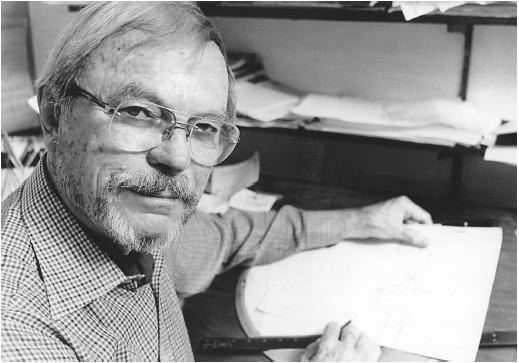
Tex Avery

He was born in February 26 , 1908, Taylor and died in August 26, 1980, Burband. He Educated in North Dallas High School (1927).

Frederick Bean "Texas/Fred/Tex" Avery was an American Animator, cartoonist, voice actor and director, famous for profucing animated cartoons during The Golden Age of Hollywood abunation.

The animation that he did were:  Creation of Looney Tunes stars, Daffy Duck, and Bugs Bunny.

Avery's style of directing encouraged animators to strech the boundries of the medium to do things in cartoon that  could not be done in the world of live-action film. An often-quoted line about Avery's cartoons was, " In a cartoon you can do anything."

Disney's "cute and cuddly" creatures, under Avery's guidance, were transformed into unflappable wits like Bugs Bunny,  endearing buffoons like Porky Pig, or dazzling crazies like Daffy DUck. Even the classic fairy takem a market that Disney has cornered, was appropriated by Avery, who made innocent heroined like Red Riding Hood into sexy jazz babies, more than a match for any Wolf.

Wednesday, 24 April 2013

Disney Fantasia Animation

What does Walt Disney say an animation feature could do after 1938?
That audience have sustained interest with the animated cartoons.

What does he say is the primary purpose of animation?
To have response and an emotional effect on the audience.

What does he say combine to create this effect?
Retain a fragile charecters in most sketches most were made in pastels and chalk.

Tuesday, 23 April 2013

Rotoscope

Rotoscope is an animation technique in which animators trace over footage, frame by fram, for use in live-action and animated films. Originally, recorded live-action film images were projected onto a frosted glass panel and re-drawn by an animator. this projection equipment is called a rotoscope, although this device was eventually replace by computers.

Rotoscope output can have slight deviations from the true line that differs from frame, which when animated cause the animated line to shake unnaturally, or "boil".  Avoiding boiling requires considerable skill in the person perdorming the tracing, thought causing the "boil" intentionally is a stylistic technique sometimes used to emphasize the surreal quality of rotoscoping, as ub the music video "Take on Me" and animated TV series Delta State.

Rotoscope was used extensively in China's first animated feature film, Orincess Iron Fan (1941), which was released under very difficult conditions durning the Second Sino- Japanese War and World War II.


Tuesday, 5 February 2013

Who invented the spindle viewer?

 Joseph Plateau invented the spindle viewer in 1832.

Joseph P. and his sons introduced the phenakistoscope (“spindle viewer”). Simon von Stampfer also invented it independently in the same year of Vienna, Austria, who called his inventions a stroboscope.


Tuesday, 22 January 2013

When was kinetiscope invented?

It was invented in 1888, Thomas Edison built a Kinetiscope, or peep-hole viewer. 
On April 14, 1894, a public Kinetoscope parlor was opened by the Holland Bros.